
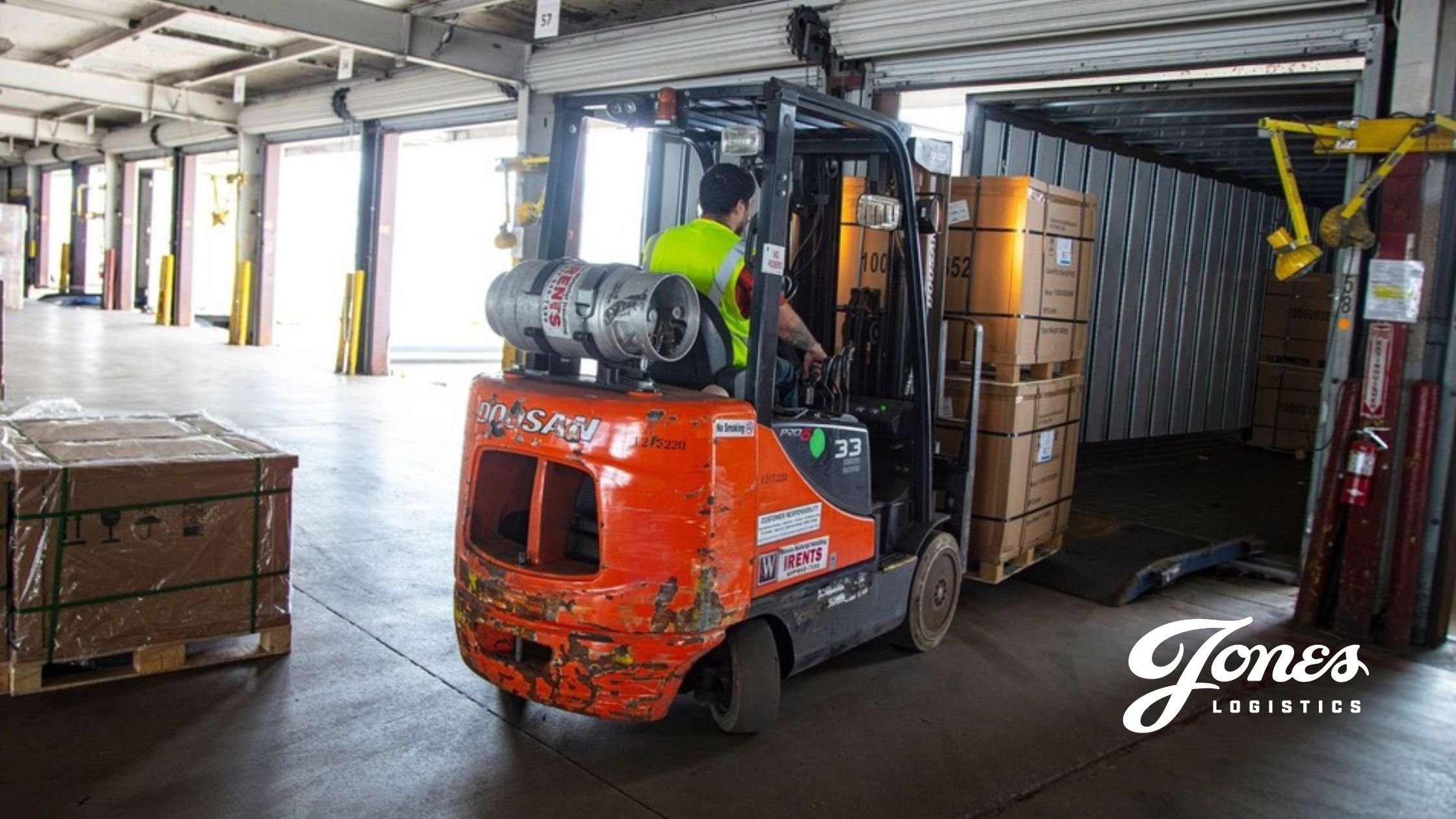
Efficiency is everything. Across the country, companies are under increasing pressure to move goods faster, reduce inventory overhead, and meet rising customer expectations without sacrificing profitability. That’s why many forward-thinking CFOs and logistics coordinators are starting to focus on cross docking.
Cross docking is a lean distribution strategy that helps reduce costs and get products to market faster. By streamlining operations and cutting transit times, this strategy can deliver meaningful savings across your supply chain.
This guide to cross docking will walk you through everything you need to know to get started, including what it is, how it works, and the benefits that it can unlock for your business.
What is Cross Docking?
Cross docking is a supply chain strategy that involves transferring products directly from inbound to outbound transportation. This eliminates the need for long-term storage. Therefore, instead of inventory sitting in a warehouse, products arrive at your distribution center, get sorted, and are loaded onto another truck within hours.
Cross docking now plays a vital role in the modern supply chain. It helps companies stay nimble, reduce storage costs, and adapt quickly to changing circumstances. This has become especially important in industries that rely on just-in-time delivery, ship temperature-sensitive products, and prioritize fast delivery.
How Cross Docking Works In a Warehouse Setting
The goal of cross docking is to keep inventory in motion. This means implementing processes to speed up unloading times, sorting, and repacking. In a typical distribution center, cross docking looks something like this:
- An inbound shipment arrives.
- Products are sorted or consolidated based on their next destination. This sometimes involves pallet reconfiguring, labeling, and light handling.
- Outbound shipments are loaded onto waiting trucks.
- Goods leave the facility, typically within 24 hours.
Types of Cross Docking Strategies
The core philosophy behind cross docking, keeping items in motion, is relatively simple, but the strategies companies use to make this happen can be complex. Here are some of the most widely used cross docking approaches to give you an idea:
Pre-Distribution vs. Post-Distribution
The two main types of cross docking are pre- and post-distribution. Pre-distribution involves assigning products to specific end destinations before they arrive at your cross dock. This requires strong coordination and upstream planning, but can be highly efficient when you have stable, predictable demand.
Post-distribution means sorting goods after arrival based on real-time demand, inventory status, or routing needs. This is a more flexible approach to cross docking, but requires more advanced sorting capabilities and increased data visibility.
Continuous Flow
Some operations also use continuous flow cross docking. This involves precisely timing inbound and outbound shipments to keep products in motion throughout their time with you.
The continuous flow model is popular for just-in-time manufacturing, retail replenishment, and other sectors where delays can disrupt product and customer fulfillment. To be successful, you need highly accurate demand forecasting, tight scheduling, and a dependable logistics partner like Jones Logistics.
Deconsolidation and Consolidation Arrangements
Finally, deconsolidation and consolidation arrangements are also widely used. These support different business goals and types of supply chains.
For example, deconsolidation means breaking large inbound shipments into smaller, customer-specific loads for final delivery. This is useful when receiving items in bulk from a manufacturer that you need to distribute across regional hubs.
Consolidation is the opposite of that. It means combining multiple small inbound shipments into a full truckload outbound shipment. This can reduce transportation costs, which is why it’s often used for LTL freight optimization and regional distribution services.
Key Benefits for Your Business and Best Case Scenarios
Cross docking is a logistics upgrade that can directly impact your bottom line. Here are some of the key benefits:
- Reduced warehouse space and storage costs: When goods spend less time in your facility, you can reduce the amount of storage space you pay for and avoid sinking capital into long-term inventory holdings.
- Streamlined operations and fewer delays: Fewer touchpoints mean less labor, faster processing, and fewer chances for things to go wrong.
- Improved delivery speed and customer satisfaction: Reducing storage lag helps you meet delivery windows more consistently, which keeps customers happy.
- Enhanced load consolidation: You can combine LTL shipments and redistribute bulk inventory more efficiently with cross docking.
- Lower inventory carrying costs: Cross docking helps you maintain a lean, capital-efficient inventory, which leaves you with more funds to invest elsewhere.
Some of the industries that benefit most from cross docking include consumer goods and retail, chemical manufacturing, durable goods, and raw materials. However, companies across many other sectors also use these logistics services to gain a competitive advantage.
For example, a construction supply company in Texas might use cross docking to move materials from inbound trucks straight to job sites across the southeast. This could reduce delivery delays and eliminate unnecessary storage costs to improve capital efficiency.
Note that this differs slightly from 3PL and dedicated trucking services. Cross docking is a logistics process related to receiving, sorting, and reloading goods without storage. It can, however, be integrated into both 3PL and dedicated solutions to enhance speed, efficiency, and control.
Risks of Cross Docking to Keep In Mind
Cross docking can create powerful new efficiencies for your business, but it’s not without risks. Here are some of the most important ones to keep in mind:
- Dock congestion and delays: Poor scheduling can create bottlenecks, especially if your dock doors or labor resources are limited.
- Limited room for error: When you don’t have the safety net of storage, any inbound delays or inaccuracies can immediately impact outbound schedules.
- High coordination requirements: Cross docking demands precise communication between carriers, suppliers, and warehouse teams.
- Technology dependence: Cross docking leverages technology like warehouse management systems and transport management systems to avoid errors that cause delays. It may not be right for you if you don’t want to invest in this.
Is Cross Docking Right for You?
Cross docking can unlock significant savings for your business, but given the risks, it’s not the right approach for every company. When deciding whether to use it in your supply chain, ask the following questions:
- Do you ship high volumes of goods to repetitive destinations?
- Is your product time-sensitive, temperature-controlled, or prone to spoilage?
- Are you looking to reduce inventory costs and shorten delivery timelines?
If you answered yes to any of these questions, there’s a good chance that cross docking is right for you. The good news is that you don’t have to design a custom approach on your own.
Instead, consider partnering with Jones Logistics. We offer end-to-end support to help companies build more efficient, scalable logistics strategies. Our integrated approach and friendly, in-house experts can help you adopt, execute, and optimize strategies like cross docking with less internal labor.
Ready to rethink how your freight moves? Explore our distribution and warehousing services to get started today.